Table of Contents
- What Actually Causes Low Engagement
- The Real Impact of Weak Hooks
- Why Retention Drives Engagement
- Why Content Value Determines Interaction
- The Role of Interaction Triggers
- How Structure Influences Engagement
- What Engagement Signals Actually Matter
- Why Consistency Still Shapes Performance
- How Profile Quality Influences Engagement
- The Hidden Distribution Window Most Creators Ignore
- How to Improve Engagement Effectively
- Instagram Engagement FAQs (2026 Guide)
- Why is my Instagram engagement suddenly low?
- What is a good engagement rate on Instagram in 2026?
- Does Instagram engagement directly affect reach?
- Which engagement signals matter the most?
- Why do my posts get views but no engagement?
- How does retention impact engagement?
- What is dwell time on Instagram?
- Do likes still matter in 2026?
- How can I increase Instagram engagement quickly?
- Why is my engagement low despite posting consistently?
- Does posting time affect engagement?
- Can small accounts achieve high engagement?
- Does profile quality affect engagement?
- How long does it take to improve engagement?
- Conclusion
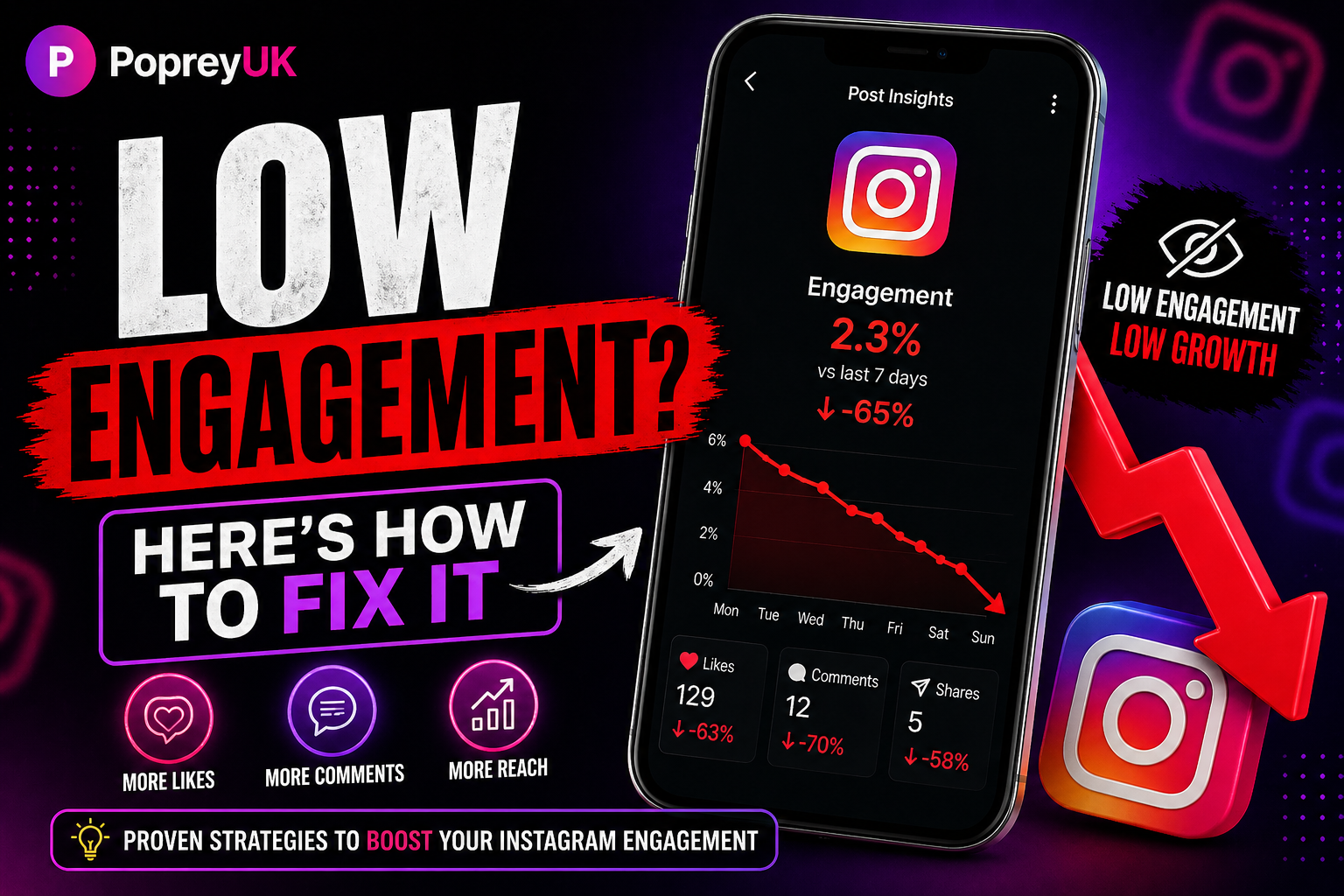
Low engagement on Instagram is not random. It is a direct reflection of how your content performs in its first moments. Most posts do not fail because of quality. They fail because they do not generate the right signals early enough.
Instagram does not reward effort or consistency alone. It rewards content that captures attention, holds it, and converts it into interaction.
If your posts are not getting likes, comments, or shares, it usually means they are being filtered out before they ever reach a wider audience.
What Actually Causes Low Engagement
Low engagement is rarely caused by a single issue. It is usually the result of multiple weak signals working together.
Instagram evaluates how users behave on your content. If users do not stay, interact, or respond, the system assumes the content lacks value. This directly limits reach and prevents further distribution.
In most cases, low engagement is a combination of weak retention, unclear content value, and lack of interaction triggers. Fixing only one of these rarely improves performance.
The Real Impact of Weak Hooks
The first few seconds determine whether your content gets a chance to perform.
Users decide instantly whether to continue or scroll. A weak opening leads to an immediate drop-off, which reduces both retention and engagement.
Common issues include:
No clear attention grab
Slow or confusing start
No immediate reason to continue
A strong hook does not just attract attention. It sets expectations. When users understand what they will gain, they are more likely to stay and engage.
Why Retention Drives Engagement
Retention is one of the strongest signals in Instagram’s ranking system because it reflects how engaging your content actually is.
Instagram evaluates:
Time spent on content
Completion rate
Replay behaviour
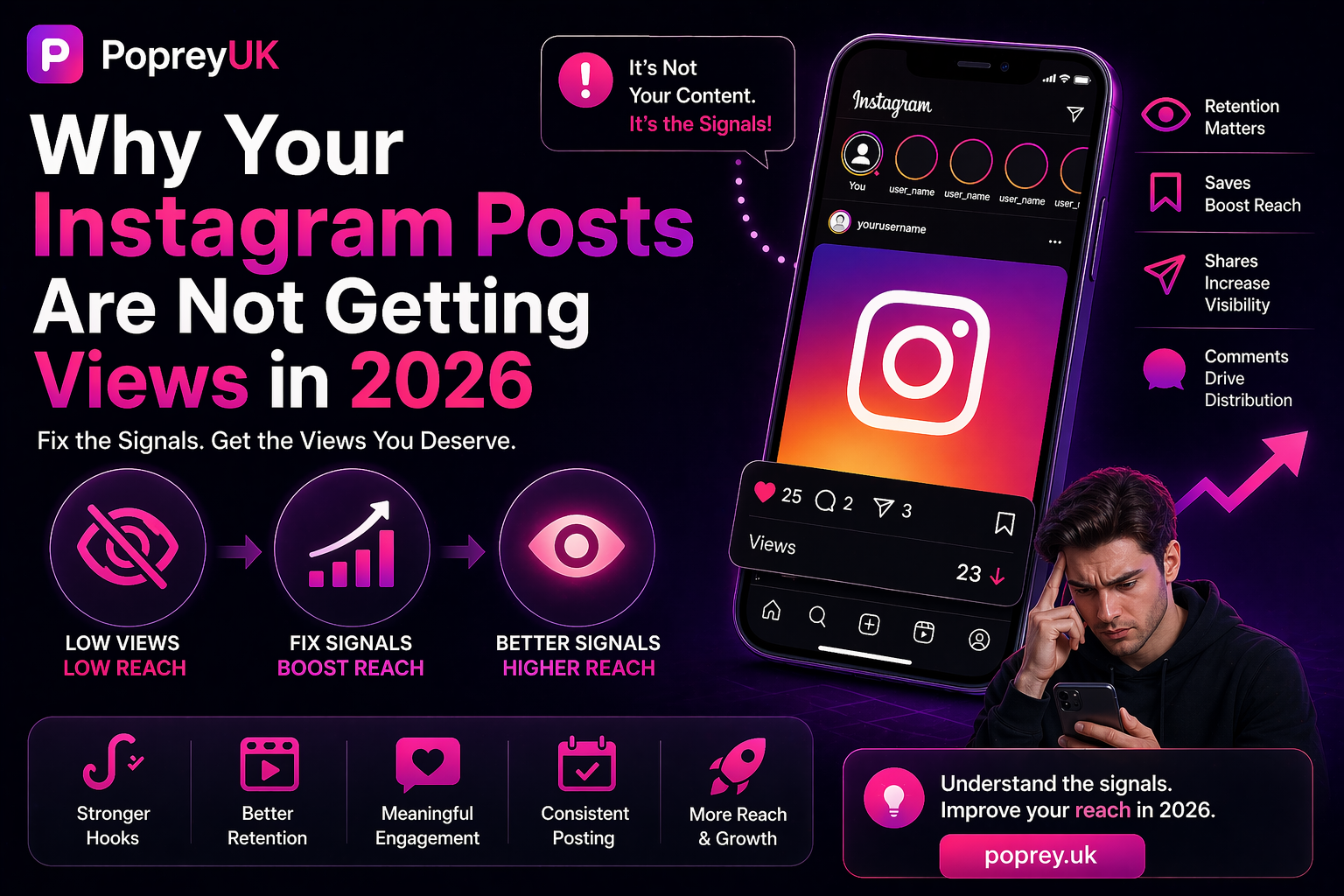
When users stay longer, they are more likely to interact. This creates a compounding effect where higher retention leads to higher engagement, which then increases reach. On the other hand, early drop-offs signal low value, which limits distribution regardless of content quality. To understand this deeper, see why your Instagram posts are not getting views in 2026.
Why Content Value Determines Interaction
Users engage only when they receive clear value.
This value can take different forms:
Useful information
A strong insight
Entertainment
Relatable ideas
The key is clarity. If users cannot quickly understand what they gain, they will not engage.
High-performing content communicates value within the first few seconds, making it easier for users to decide to stay and interact.
The Role of Interaction Triggers
Even valuable content can underperform if it does not guide user behaviour.
Users often need a reason to act. Without direction, they consume passively and move on.
Simple interaction triggers include:
Asking a direct question
Encouraging saves or shares
Inviting opinions
These triggers convert passive viewers into active participants, which strengthens engagement signals.
How Structure Influences Engagement
Content structure affects how easily users consume your message.
If your content is unclear or difficult to follow, users disengage quickly, even if the idea is strong.
Strong structure includes:
A clear starting point
Logical flow
A focused takeaway
When content flows naturally, users stay longer and are more likely to interact.
What Engagement Signals Actually Matter
Instagram prioritizes meaningful interaction over surface-level actions.
The most important signals are:
Saves
Shares
Comments
These actions indicate a deeper interest. For example, a save shows long-term value, while a share extends your content to new audiences.
The platform also evaluates how often these actions occur relative to views. A higher ratio signals strong content quality, which increases distribution. For a deeper breakdown of how engagement is measured, see Instagram engagement rate explained in 2026.
Why Consistency Still Shapes Performance
Consistency helps build stable engagement patterns over time.
When posting is irregular:
Audience activity declines
Engagement becomes unpredictable
Visibility drops
Consistent posting keeps your audience engaged and helps maintain steady performance signals.
However, consistency without quality does not work. Both need to be aligned.
How Profile Quality Influences Engagement
Engagement is not only about individual posts. Your overall profile also impacts performance.
Instagram considers:
Engagement history
Audience activity
Content consistency
A strong profile builds trust. When users trust your content, they are more likely to interact.
Even high-quality posts can underperform if the account lacks credibility or consistency.
The Hidden Distribution Window Most Creators Ignore
Most creators focus on content quality but ignore what happens immediately after publishing.
Instagram evaluates content in a short window where early behaviour determines whether it expands or stops.
During this phase:
Content is shown to a limited audience
User behaviour is tracked instantly
Engagement speed is measured
Fast interaction signals strong value. Slow engagement limits reach.
This explains why similar posts can perform differently. The one that gains early traction expands, while the other does not.
Understanding this window allows you to focus not only on content but also on how it performs immediately after posting. Early engagement speed is strongly influenced by audience responsiveness. Accounts with an active audience, consistent engagement, and steady Instagram followers growth tend to generate faster interaction signals, which improve early distribution and increase the chances of content expanding beyond the initial testing phase.
How to Improve Engagement Effectively
Improving engagement requires focusing on the signals that actually matter.
Start with:
Capturing attention immediately
Increasing retention and watch time
Delivering clear and focused value
Encouraging meaningful interaction
Posting consistently
These improvements work together. When combined, they create stronger performance signals that increase both engagement and reach.
Instagram Engagement FAQs (2026 Guide)
Why is my Instagram engagement suddenly low?
Sudden drops usually happen when recent posts fail to generate strong early signals such as retention, saves, or shares. When early performance is weak, Instagram limits further distribution.
What is a good engagement rate on Instagram in 2026?
A good engagement rate depends on your niche and audience size. However, higher interaction relative to reach or views indicates stronger content performance.
Does Instagram engagement directly affect reach?
Yes. Engagement signals such as saves, shares, and comments help Instagram determine whether your content should be shown to more users.
Which engagement signals matter the most?
The most important signals are watch time, saves, shares, comments, and overall retention. These indicate real user interest.
Why do my posts get views but no engagement?
This usually means your content is reaching users but not providing enough value or clarity to trigger interaction.
How does retention impact engagement?
Higher retention increases engagement because users who spend more time on your content are more likely to interact with it.
What is dwell time on Instagram?
Dwell time refers to how long users stay on your post, including reading captions or watching videos. Longer dwell time signals higher content value.
Do likes still matter in 2026?
Likes still contribute to engagement, but they are less important compared to saves, shares, and comments.
How can I increase Instagram engagement quickly?
Focus on improving your hook, increasing retention, and encouraging meaningful actions such as saves and shares.
Why is my engagement low despite posting consistently?
Consistency alone is not enough. If your content does not generate strong interaction signals, engagement will remain low.
Does posting time affect engagement?
Yes. Posting when your audience is active can improve early engagement, which increases the chances of wider reach.
Can small accounts achieve high engagement?
Yes. Smaller accounts often achieve higher engagement rates when their content is focused and relevant to a specific audience.
Does profile quality affect engagement?
Yes. Profiles with clear positioning, consistent content, and active audiences tend to generate stronger engagement.
How long does it take to improve engagement?
Engagement can start improving within a few posts if retention, content quality, and interaction signals are optimized.
Conclusion
Low engagement on Instagram is usually the result of weak performance signals rather than content quality alone. Retention, interaction, and consistency determine how your content performs. When these signals improve, engagement and visibility follow. Instagram prioritizes content that holds attention and generates meaningful interaction. Understanding and applying these principles is essential for consistent growth.